Wednesday, 31 October 2018

Freemius Launches The “We Got Your Back” Pilot Program For WordPress Products


Calling all WordPress product creators who are selling through Freemius – today we are officially launching the “We Got Your Back” program, which will help you handle all of the things you prefer to avoid in your business! I can see you doubting and sneering at what I just wrote in that 1st paragraph, but if you’re selling your WordPress plugins and themes with Freemius, then you already know that we were not kidding when we said that we would truly become your business partners and do everything we can to empower your business and to push it forward, simply because YOUR success is literally our success.
As you know, the Freemius service was created in order to handle everything that might be considered “meta” in running an online business that sells WordPress plugins and themes. In other words, everything that’s not about coding the actual product:
Checkout
Licensing
Recurring payments
Automatic updates
Taxes (EU VAT)
Trials
Affiliation
Cart recovery
Decreasing the uninstall rate
Collecting user-feedback
Customer communication
Etc.
As you can see, another thing we were not kidding about was when we said: “Your WordPress business headache?
Source: https://managewp.org/articles/18042/freemius-launches-the-we-got-your-back-pilot-program-for-wordpress-products


source https://williechiu40.wordpress.com/2018/10/31/freemius-launches-the-we-got-your-back-pilot-program-for-wordpress-products/

Freemius Is Launching The “We Got Your Back” Pilot Program For WordPress Product Sellers – see if your business is eligible:


Calling all WordPress product creators who are selling through Freemius – today we are officially launching the “We Got Your Back” program, which will help you handle all of the things you prefer to avoid in your business! I can see you doubting and sneering at what I just wrote in that 1st paragraph, but if you’re selling your WordPress plugins and themes with Freemius, then you already know that we were not kidding when we said that we would truly become your business partners and do everything we can to empower your business and to push it forward, simply because YOUR success is literally our success.
As you know, the Freemius service was created in order to handle everything that might be considered “meta” in running an online business that sells WordPress plugins and themes. In other words, everything that’s not about coding the actual product:
Checkout
Licensing
Recurring payments
Automatic updates
Taxes (EU VAT)
Trials
Affiliation
Cart recovery
Decreasing the uninstall rate
Collecting user-feedback
Customer communication
Etc.
As you can see, another thing we were not kidding about was when we said: “Your WordPress business headache?
Source: https://managewp.org/articles/18042/freemius-is-launching-the-we-got-your-back-pilot-program-for-wordpress-product-sellers-see-if-your-business-is-eligible


source https://williechiu40.wordpress.com/2018/10/31/freemius-is-launching-the-we-got-your-back-pilot-program-for-wordpress-product-sellers-see-if-your-business-is-eligible/

WP Accessibility Team on Gutenberg: “We have to draw a line.”


WordPress’ accessibility team has published a statement on the level of overall accessibility of Gutenberg. The team, largely a group of unpaid volunteers, collaborated on a detailed assessment that publicly challenges Gutenberg’s readiness for core in a way that no other WordPress team has done through official channels to date. After a week of testing the most recent version of the plugin, the team concluded that they cannot recommend Gutenberg to be used by anyone who relies on assistive technology. The Accessibility team – like any team in WordPress – has no specific authority over the project. Because we’re a small team of volunteers, we’ve been pragmatic in how we apply the guidelines. We have made tradeoffs in prioritization. Gutenberg is a place where we feel it is necessary to draw a line. The ability to author, edit, and publish posts is the primary purpose of WordPress.
Accessibility team rep Joe Dolson, speaking on behalf of the team, cited cognitive load and complexity, inconsistent user interface behavior, heavy reliance on keyboard shortcuts, and difficulties with keyboard navigation through blocks, among other concerns about Gutenberg.
Source: https://managewp.org/articles/18041/wp-accessibility-team-on-gutenberg-we-have-to-draw-a-line


source https://williechiu40.wordpress.com/2018/10/31/wp-accessibility-team-on-gutenberg-we-have-to-draw-a-line/

Tuesday, 30 October 2018

5 UX tips for better SEO results

When Google’s Search Quality Senior Strategist Andrey Lipattsev was asked about Google’s most important ranking factors, he gave three: content, links, and RankBrain.

We’ve known for a long time that links impact websites’ search rankings and Google has for a very long time emphasized the importance of quality content. What is RankBrain all about, however? Unlike content and links, RankBrain is influenced by behavior metrics that indicate that users actually find a site to be useful. These behavior metrics, more than anything else, are influenced by the usability of your website — in other words, user experience (UX).

If you’ve been focusing on content and links at the expense of user experience, you won’t be able to maximize the performance of your website in the search engines. The following five UX tips will give you an SEO advantage.

1. Work on your site’s mobile compatibility

Google hasn’t hidden the fact that it pays a lot of attention to a site’s mobile compatibility. Anyone who has been in SEO for more than a few years will remember mobilegeddon, and mobile-first indexing is a thing: in other words, coming to terms with the realization that most of the usage of its search engine comes from mobile devices, Google has decided to start indexing the mobile version of a website first.

In other words, if your website does not have a mobile version — or if the mobile version of your website is not properly optimized — then you could lose more than half of your search traffic.

Below are some tips to ensure your website is mobile compatible:

  • Use a responsive website design that adapts to mobile devices or create a mobile version of your website that is properly redirected for mobile users.
  • Ensure that content is consistent across your mobile site and desktop site.
  • Make sure that all the content formats used on your mobile site can be crawled and indexed.
  • Ensure that metadata is consistent across the mobile and desktop version of your site.
  • Ensure that your sitemap is also accessible on your mobile site.

2. Optimize your website speed

Just how important is the speed of your website? Research shows that a single second delay in site load time can reduce your conversions by 7 percent, and that 40 percent of people will abandon a website that takes more than three seconds to load. In other words, people don’t like slow websites. And that explains why Google keeps strengthening page speed as a ranking factor.

While Google has long been using site speed as a factor to rank desktop sites, it recently began to use site speed as a ranking factor for mobile sites in July 2018.

You can make your website faster by doing the following:

  • Enable caching
  • Use a CDN
  • Remove unnecessary scripts and plugins
  • Compress your images
  • Combine your background images into CSS sprites
  • Minify your JavaScript and CSS

3. Optimize your site architecture

Another UX tip that will give your site an edge in the search engines is to optimize your site architecture in a way that is easy to use and search engine friendly. For example, take a look at the following screenshot from the website of Lookers:

In particular, pay attention to the navigation bar and you will notice a few things:

  • The navigation links are clear and descriptive enough to make people know what they will get without much thought.
  • People are presented with links to all the key pages — so they don’t have to waste time looking for what they want. One of the hallmarks of good site architecture is that it enables people to get to where they want with fewer clicks.
  • The format and presentation of the navigation links is consistent — both the link structure and the description.

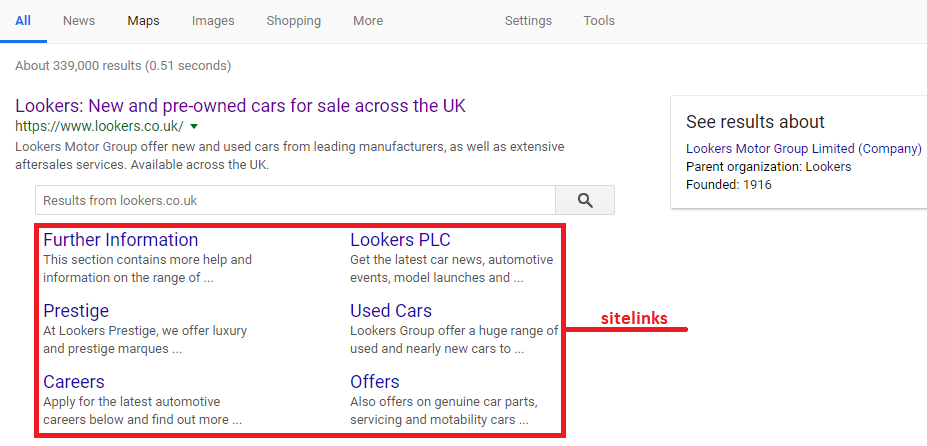
Not only will a good site structure make your site more accessible to readers, while at the same time making it easy for the search engines to crawl your website, but you are also likely to be rewarded by sitelinks. Here’s what a Google search for Lookers turned up:

4. Use breadcrumbs navigation

A breadcrumb is a secondary navigation system that helps users know where they are on your website and that can help them trace their way back. Besides the fact that breadcrumbs make it easy for users to navigate your website, they also make it easy for Google to see how your site is structured and while increasing your site’s indexability.

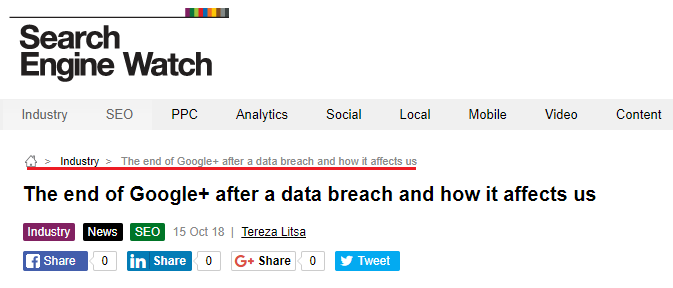
Here’s a look at SEW’s breadcrumbs:

As you can see, from the screenshot above, the trail goes like this “Home >> Industry >> The end of Google+ after a data breach and how it affects us.” In other words, it makes it easy for the user to trace his/her steps back to the primary category of the article, then to the homepage.

5. Work on your content readability

While we tend to focus on the technical aspects of UX when it comes to SEO, content also plays a great role in UX as far as the big G and other search engines are concerned. Making the following tweaks to your content will give you an edge:

  • Ensure your content is properly formatted. Use a lot of subheadings, bullets, and numberings to make your content more easy on the eyes.
  • Use short paragraphs and avoid long blocks of text.
  • Work on your content grammar, spelling, and structure.
  • Spice up your content with visuals and multimedia.

Conclusion

While good UX can give you an edge when it comes to SEO, it does more than that: it ensures that users actually use your website while guaranteeing an improvement in ROI and conversions.


source https://searchenginewatch.com/2018/10/30/5-ux-tips-seo

@JJJ Review of WordPress 5.0 Beta 1


I’m writing this post using the new block-based editor that comes packaged with the first WordPress 5.0 beta, known previously and externally as Gutenberg. For just general writing, so far it ain’t so bad, but one thing that bugs me straight away is that the auto-save causes the UI in the upper right corner to spaz out every few seconds. I keep thinking it’s a notification in macOS, so I stop writing to look up at it, because it’s all just outside my periphery.
So far in this post, I haven’t needed to add any blocks or format any text, and I haven’t needed to move any text or paragraphs around. I have a feeling this is how most people will interact with this editor most of the time, and for that, it generally gets the job done no different than the classic editor did.
I suppose it’s about time I try to insert some kind of image, so here’s a shot I took today of some concrete that got poured behind the building my office is in.
I think it’s a little weird that the default new-block buttons are: image, header, and gallery. I also think it’s weird when I hover over the “P” for paragraph button, that it changes to 2
Source: https://managewp.org/articles/18040/jjj-review-of-wordpress-5-0-beta-1


source https://williechiu40.wordpress.com/2018/10/30/jjj-review-of-wordpress-5-0-beta-1/

When is it Worth It to Buy Premium WordPress Plugins? (Explained)

We are often asked by users when is it worth investing in premium WordPress plugins? One of main reasons why WordPress is the popular website builder in the world is because it gives you access to thousands of free and paid plugins (also known as premium WordPress plugins). In this article, we will explain when is it worth buying premium or paid WordPress plugins.
When is it worth buying premium WordPress plugins

What are Premium WordPress Plugins?

Premium plugins are paid version of WordPress plugins that come with additional features, priority support, documentation, and regular updates.

You can learn more about WordPress plugins by reading our beginner’s guide on what are WordPress plugins and how do they work.

WordPress has become the most popular blogging platform in the world because it has a healthy ecosystem of both free and paid plugins. At the time of writing this article, there are more than 55,000 free plugins available in WordPress.org directory. You can use these free plugins to access various features without paying anyone.
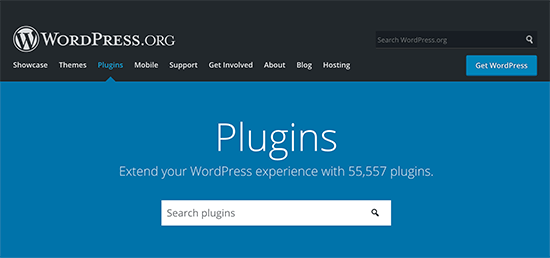
Free WordPress plugins

Often beginners wonder how does WordPress make money if the plugins are free. Well, WordPress does not own all these plugins.

Since WordPress is open-source, majority of these free plugins are written by third-party developers who want to give back to the WordPress community and build a brand for themselves, so they can get more client-work.

But the issue is that like any other software, WordPress plugins also need to be properly maintained and updated. Although the individual developer is not required to offer support, most of them go above and beyond to help users and even add new features as requested.

As you can imagine, all these things take a lot of time and resources. Plugin authors are often unable to give free plugins proper attention as they grow and get a larger user base.

For some plugin developers, it becomes difficult to take time out of their work and personal life to maintain a free product over a long period.

This is where premium WordPress plugins come in.

For a small licensing fee, you get access to dedicated support, guaranteed updates, and premium features. The license fee provides plugin authors steady income, so they can improve the product and dedicate more time to growing their WordPress plugin business.

On the other hand, it gives you, the customer, a more refined product with reliable support and updates.

That being said, let’s talk about when you should consider buying premium WordPress plugins.

Are Premium WordPress Plugins Worth the Money?

If you have read our guide on controlling the cost of a WordPress website, then you would know that we are not a fan of unnecessary spending.

We believe that most beginners can control their costs by using free WordPress plugins whenever they can. There are free versions for many of the the best WordPress plugins on the market. Following are just a few examples of great premium WordPress plugins offering free or lite versions.

However as your website or business grow, you will want access to more features, priority support, and reliable plugins that you can count on for regular updates.

To help you decide, we have added the top reasons that justify investing in a premium WordPress plugin.

1. Solutions Specific WordPress Plugins

Specific features

There are some WordPress plugin categories that cater to very specific solutions. For example, building a membership website or selling online courses are hard work.

Free plugins alone cannot do justice to these complex solutions. Even if you find a free plugin for the job, you will likely have to purchase paid addons to support their business.

If you are building a website that requires a very specific / advanced functionality, then you will be better off with a premium WordPress plugin.

2. Advanced Features

Advanced features

While there are free plugins for most basic tasks, you will only find advanced features in paid plugins. That’s mainly because building and maintaining advanced features take a lot of resources.

For example, while WPForms Lite is the most beginner-friendly WordPress contact form plugin, the pro version of WPForms comes with advanced features like user registration form, surveys and polls, payment forms, etc.

3. Dedicated Support from Plugin Developers

Dedicated support

Support is not guaranteed with free WordPress plugins because free plugin authors are not required to offer support. If you are new to WordPress with no programming skills, then support becomes crucial for you. Premium WordPress plugins give you faster email responses for your support questions.

4. Extensive Documentation and Tutorials
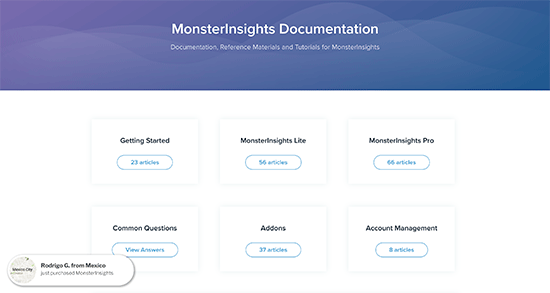
Documentation and guides

Premium and paid WordPress plugins provide extensive documentation to help you get started without even contacting support. Many premium WordPress plugins have docs or resources sections where you can find guides, tutorials, and video instructions. These resources help you use the plugin without waiting for someone to help you out.

5. Regular and Frequent Updates
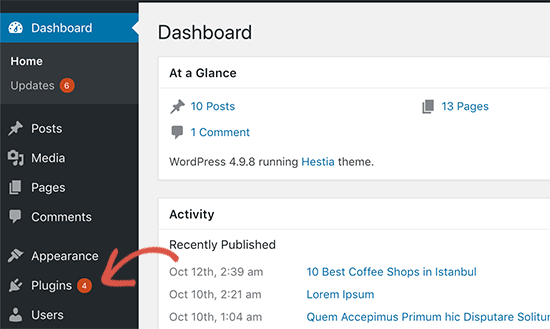
Plugin updates

Free WordPress plugins are sometimes abandoned by their developers. This leaves your website open to security vulnerabilities and bugs. Sometimes you might not even realize that a plugin has been abandoned until you see your site behaving strangely after updating WordPress.

Premium WordPress plugins give you regular updates to address bugs, glitches, and most importantly any security issues. You don’t have to do anything as those updates would automatically appear in your WordPress dashboard, and you can install them with just a few clicks. See our guide on how to properly update WordPress plugins for detailed instructions.

6. New Features and Enhancements

Free WordPress plugins usually don’t have an incentive to enhance and improve something that is already working for many websites.

On the other hand, paid WordPress plugins are businesses with competition. In order to stay on top, they continuously work on their products by adding new features and improving existing features. Depending on your license terms, you will get access to those features right away.

7. Supporting The WordPress Ecosystem

Premium WordPress plugin companies are small businesses. By purchasing a license, you help them build a sustainable business that provides for their families and even creates new jobs all over the world.

Your small payment helps those developers create killer products for other small businesses like yours and improve the WordPress ecosystem (See: Most influential companies in WordPress).

Frequently Asked Questions about Premium Plugins

We have answered a lot of questions about premium WordPress plugins via email. To help you find the answer quickly, we have compiled the list of the most frequently asked questions.

1. Should I only use all premium plugins on my website?

No, there is no need to only use paid WordPress plugins on your website. You should only buy premium plugins when you actually need them. There are a lot of great free plugins that have no premium alternative or are much better than their paid alternatives.

2. How do I find premium WordPress plugins?

Premium WordPress plugins are not sold on the official WordPress.org website. You can buy them from their own websites. Now the problem is that all those websites are scattered, so how do you know which plugin is good?

This is where WPBeginner can help. We are the largest WordPress resource site on the internet. We regularly write how-to’s about different free and premium WordPress plugins. We do the research for you by actually testing the plugin and breaking down their features with pros and cons.

Following are just a few plugin showcases that you’ll find on WPBeginner (they contain both free and paid WordPress plugins).

Need more recommendations? Just type in your keyword in Google and add wpbeginner.com at the end of your search term.

Another way to find great premium WordPress plugins is by upgrading to the paid plans of a free plugin that you already love and use.

3. Are all premium WordPress plugins good?

No, not all of them are great. In fact, some paid plugins can be quite terrible. That’s why you need to carefully evaluate them before making the purchase. Find out who are the people behind the plugin, what kind of reputation they have, what other people are saying about the plugin on the internet.

Whatever you do, DO NOT buy a paid plugin from an unofficial source like Fiverr. Always buy the plugins from the official author website to make sure that you’re buying the secure version of the plugin.

4. Do I need to keep paying premium WordPress plugins every year?

Once you purchase a WordPress plugin, you can keep using it for as long as you want. Premium WordPress plugins come with different licensing terms. The most common licensing term is for 1 year of updates and support. If you are on a yearly license plan, then your plugin will continue to work, but you will not get updates and support after your license is expired.

If you like the plugin you are using, then you should definitely renew your license when it expires.

We hope this article helped you learn when you should buy premium WordPress plugins. You may also want to see our guide on free vs premium WordPress themes for a similar discussion regarding WordPress themes.

If you liked this article, then please subscribe to our YouTube Channel for WordPress video tutorials. You can also find us on Twitter and Facebook.

The post When is it Worth It to Buy Premium WordPress Plugins? (Explained) appeared first on WPBeginner.


source https://www.wpbeginner.com/beginners-guide/when-is-it-worth-it-to-buy-premium-wordpress-plugins-explained/

The Best Website Analytics Solutions for Your Small Business


So, you’ve been working hard to build a strong online presence, drive traffic to your website, and generate more sales for your business. And so far as you can tell, whatever it is you’re doing, is working. The problem is, without actually tracking the data, you’ll never know whether you’re actually making progress or not. Worse yet, you may be missing out on huge opportunities to grow even more, simply because you don’t know who is coming to your website, where they’re coming from, and what they’re doing once they get there.
All businesses, no matter what size, can benefit from investing in an analytics solutions to track what’s really happening on their website at any given moment.
That’s why today, we’re going to look at the top website analytics solutions for your small business so you can start monitoring your strengthes (and weaknesses) and providing customers more of what they want (and less of what they don’t).
But first, let’s take a closer look at why website analytics are crucial to the growth and success of your business.
Why Invest in Website Analytics?
In short, website analytics gives you the data
Source: https://managewp.org/articles/18039/the-best-website-analytics-solutions-for-your-small-business


source https://williechiu40.wordpress.com/2018/10/30/the-best-website-analytics-solutions-for-your-small-business/